Subterranean termite soil treatments create a lethal, subterranean perimeter barrier around a home's structural footprint. In the Piedmont and Sandhills transition of Richland County, native subterranean termites (…
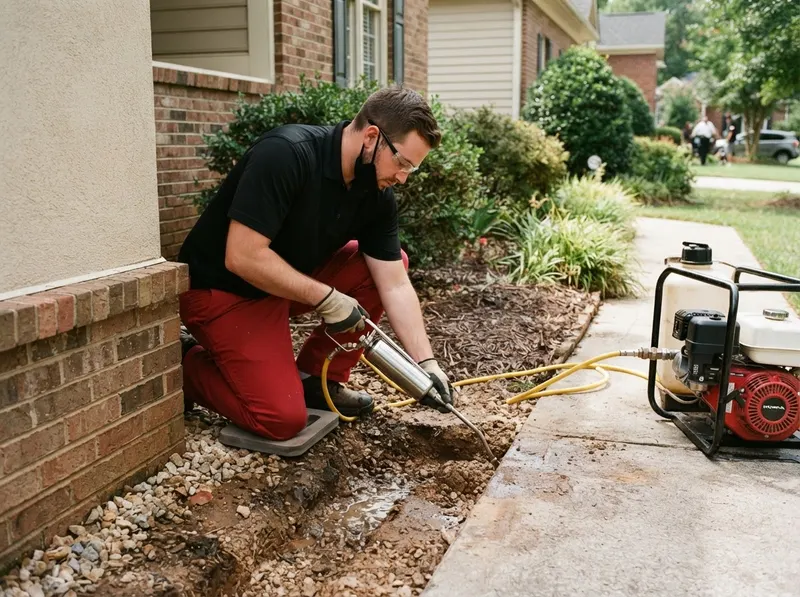
Subterranean termite soil treatments create a lethal, subterranean perimeter barrier around a home's structural footprint. In the Piedmont and Sandhills transition of Richland County, native subterranean termites (eastern subterranean termites) tunnel through porous topsoils to reach wood framing, subfloors, and drywall cellulose. Trenching involves excavating a continuous 6-inch by 6-inch trench immediately adjacent to the exterior foundation wall, applying a calibrated liquid termiticide at a standard rate of 4 gallons per 10 linear feet per foot of depth, and backfilling with treated soil. This application adheres to chemical safety parameters established by the U.S. Environmental Protection Agency to safeguard surrounding soils and local aquifers near waterways like the Congaree River and Saluda River basin.
Selecting a liquid barrier treatment over active baiting systems depends on the structural profile of the property. Historic homes with exposed crawlspaces, common throughout Shandon, Earlewood, Cottontown, and Elmwood Park, benefit from direct liquid barriers because high relative humidity in the Midlands allows subterranean tunnels to bridge masonry piers rapidly. A perimeter liquid treatment immediately saturates entry pathways around foundation brick and load-bearing piers. Conversely, properties on monolithic slabs in Rosewood or Olympia require targeted slab injection via precision drilling through expansion joints, balancing structural containment with surface preservation. Unlike topical repellents, non-repellent formulations allow foraging termites to transfer the active ingredient throughout the subterranean nest via trophallaxis, an eradication process validated in termite research published by the Entomological Society of America.
Soil composition heavily influences termiticide binding across Columbia neighborhoods. Dense red clay in Heathwood retains termiticide binding tightly but requires slower rodding rates to prevent runoff, whereas sandy loam compositions near Lake Katherine and Forest Acres drain quickly, demanding precise rodding depths to achieve continuous coverage down to the footer level. Structural perimeter treatments adhere to regulatory standards enforced by the Clemson University Department of Pesticide Regulation, which oversees pest control licensing across South Carolina. The procedure leaves no lingering chemical odor indoors, eliminates the need for occupants to vacate the home overnight, and avoids mandatory multi-year service contracts.
Every job gets a firm, written price after a free on-site visit.
Tell us about your subterranean termite soil treatments job in columbia and we'll send a clear, written quote, usually the same day.
 CedarWing Extermination