Rodent control in Columbia requires addressing the biological vulnerabilities of homes in historic and established districts like Shandon, Earlewood, and Elmwood Park, where pier-and-beam foundations allow subterranean…
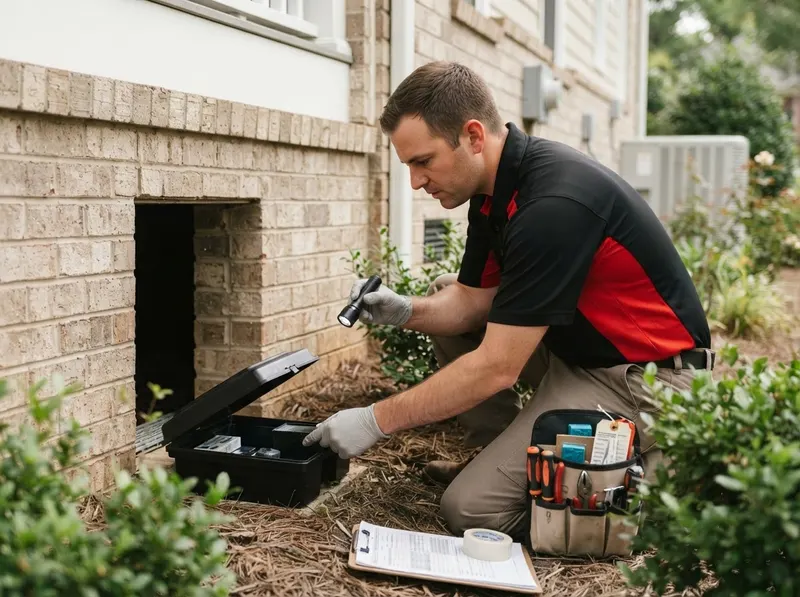
Rodent control in Columbia requires addressing the biological vulnerabilities of homes in historic and established districts like Shandon, Earlewood, and Elmwood Park, where pier-and-beam foundations allow subterranean burrowers straightforward access. Roof rats (*Rattus rattus*) routinely bypass ground-level defenses by navigating mature pecan and water oak canopies in Heathwood and Forest Acres, penetrating attic spaces through deteriorated fascia boards and gable vents. Conversely, Norway rats (*Rattus norvegicus*) exploit moisture gradients near the Columbia Canal and Riverfront Park or municipal stormwater lines in Rosewood, burrowing under slab foundations. Structural security requires terminating these harborage pathways at the building envelope rather than relying solely on temporary interior bait applications that allow rodents to expire inside enclosed wall cavities.
Effective structural eradication operates in four strictly numbered mechanical stages:
1. Envelope Inspection: Technicians map all foundation openings, roof transitions, and utility penetrations exceeding 6 millimeters using guidelines aligned with the CDC Rodent Prevention Standards.
2. Population Knockdown: Non-toxic mechanical snap traps and multi-catch stations are staged along detected interior travel runs according to rodent movement dynamics documented by the Journal of Integrated Pest Management, removing the breeding population within 72 hours.
3. Physical Exclusion: Points of entry are armored using galvanized 19-gauge hardware cloth, metal flashing, and elastomeric sealants, adhering to building standards published by the International Association of Certified Home Inspectors.
4. Decontamination: Biohazard cleanup neutralizes urine-marked pheromone trails using commercial antimicrobial agents, in compliance with sanitation principles from the EPA Pesticide Product Label System.
Property owners evaluating remediation options must distinguish between localized maintenance and structural restoration. Single-family homes with isolated foundation gaps around plumbing lines in Cottontown or Olympia require primary point exclusion and short-term trapping runs. However, properties bordering the heavy moisture zones of Lake Katherine often face sustained rodent pressure along the subfloor; these structures require complete crawlspace encapsulation barriers and foundation curtain walls. While localized trapping addresses active sightings immediately, omitting comprehensive perimeter exclusion guarantees reinvasion within 30 to 90 days as neighboring colonies detect the vacated territory.
All exclusion hardware must meet exterior resistance standards specified by ASTM International to withstand persistent gnawing pressures exceeding 7,000 pounds per square inch exerted by rodent incisors. When addressing rodent contamination near commercial districts or rental properties, protocols conform to structural sanitation requirements set by South Carolina Department of Public Health. Integrated pest protocols also integrate regulatory handling guidance from the Clemson University Department of Pesticide Regulation, structural air-barrier metrics defined by the U.S. Department of Energy, and environmental waste limits established by the Occupational Safety and Health Administration. Exterior bait containment complies with safety containers cataloged by the National Pesticide Information Center. Standard remediation excludes roof replacement or plumbing repairs, which must be performed by licensed trade contractors if rodent damage compromises water lines. Direct scheduling is coordinated by calling (803) 889-2915, with verified technicians dispatched in marked service units.
Every job gets a firm, written price after a free on-site visit.
Tell us about your columbia rodent control job in columbia and we'll send a clear, written quote, usually the same day.
 CedarWing Extermination